
Introducing The Teaming Success Model

This post introduces our new "Teaming Success Model". You can use our free version to evaluate your team, or use our paid version to evaluate teams in your organizations. Try it at teaming.columinity.com.
Teamwork and teams have been the staple of how work is done in organizations since the 1980s. The research of J. Richard Hackman into what makes teams effective has been pivotal – also to the research we do at Columinity. Hackman emphasized that teams should have stable membership and clear boundaries, and subsequent research has underscored this as a key contributor to effectiveness.
The role of teams is changing
But the role of teams and teamwork is changing. Many organizations struggle to create stable teams. The speed of technical innovation, market uncertainty and change make it hard to bring a group of people together and keep them together. People leave for other jobs, new skills emerge while others fade, and people with unique skillsets may suddenly be needed elsewhere in the organization. And then there is the rise of AI, that challenges everything we assume about how work is done in organizations.
Most teams are not "teams"
There is another angle. What we call "teams" on the work floor are rarely teams in the sense of what Hackman intended. For a group of individuals to be considered a team, they need true interdependence. That is, the work of one member depends on other members and a shared goal should drive this interdependence. Data from Columinity tells us that about 23.1% of team members (N=840) report high interdependence, whereas others report none to little (7.9%) or low-to-moderate (34.2%). Along with other research, this underscores that putting a group of individuals together doesn't make them a team - regardless of whether we call them a "team".
"Along with other research, this underscores that putting a group of individuals together doesn't make them a team"
Teaming as a verb
Amy Edmondson pointed out something similar when she observed that "teaming is a verb" (rather than a noun). Instead of putting people together and calling them a team, it is more productive to recognize that "teaming" is a dynamic process that requires teamwork skills and a collaborative mindset. Teaming can happen anywhere people work together to collaborate some shared goal. It can happen in stable teams, in fluid configurations or temporary collaborations. Teaming is "teamwork on the fly" (Edmondson).
This perspective also shifts attention from the structure of a team to the skills required for effective teaming. If organizations can develop and foster such skills, they can more quickly bring together people to address emerging challenges. This makes the capacity for teaming strategically important, especially for organizations that operate in situations of high uncertainty. The capacity for teaming thus becomes a dynamic capability.
Teaming as a dynamic capability
"Teaming" is not the same as throwing a group of individuals together haphazardly and expecting success. Teaming is already challenging in stable teams, where members get to know and understand each other and their skills. Building the capacity to team dynamically and fluidly requires even more skill and more support from organizations.
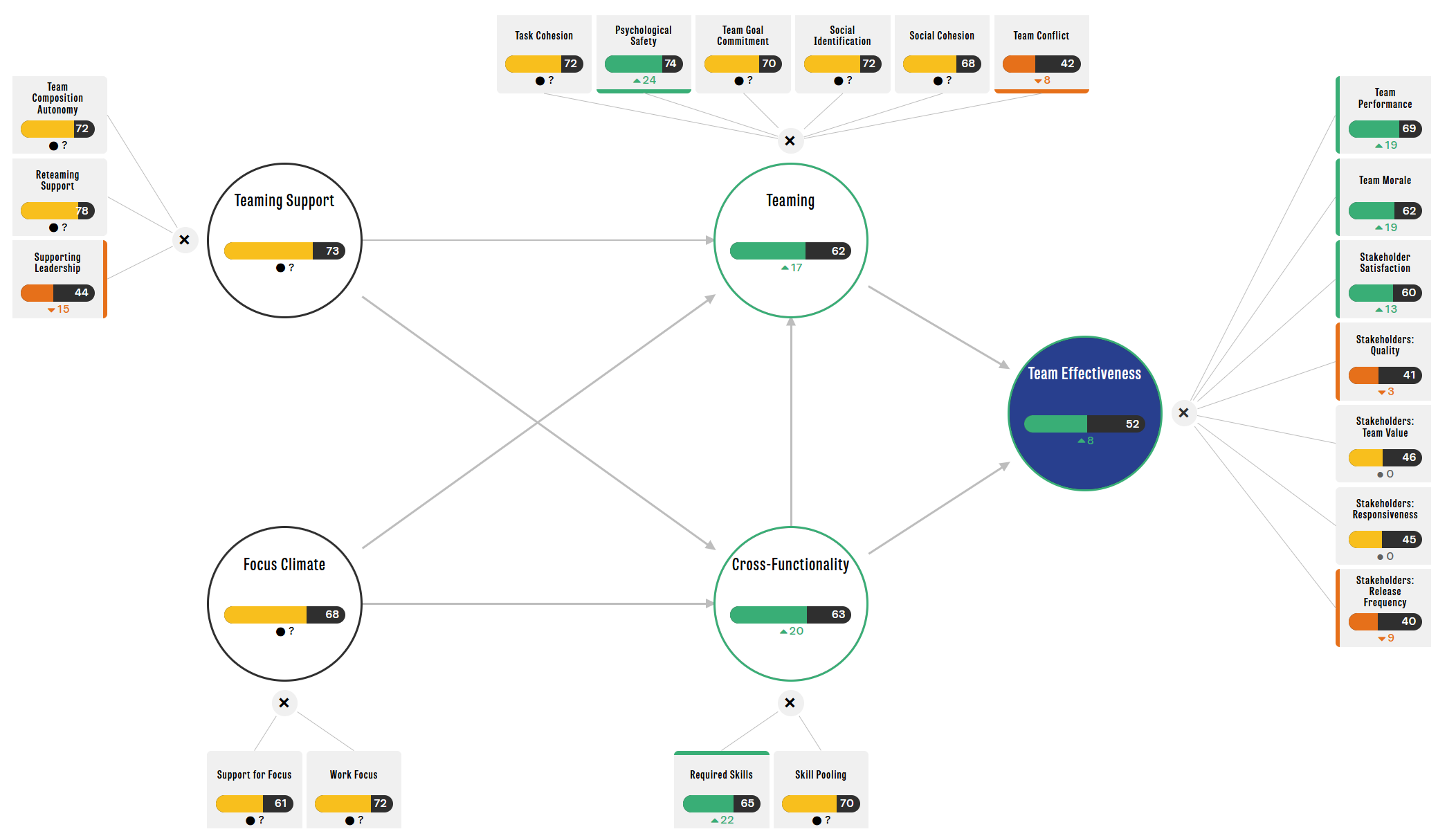
To this end, we've been working on a scientific model for teaming over the past years. The model has undergone three iterations with data from ~1.000 teams. We call it the Teaming Success Model:
Explaining the model
The model captures five core aspects of teaming:
- The quality of the teaming process itself, represented as "teaming".
- The effectiveness of the team in terms of their performance, team morale and stakeholder satisfaction.
- The ability of teams to actually team effectively, represented as "cross-functionality". This captures the degree to which a team has the required skills and team members are able to bring them together effectively.
- The level of organizational support for teaming, represented as "teaming support".
- The degree to which teams can work on their tasks with focus, represented as "focus climate".
This model is both theoretically and empirically grounded. The arrows in the model are based on what we see in the data. The structure of the model is also reflected in the data, with factors clustering together as shown. Most importantly, the model allows organizations to assess the quality of teaming and take action on those areas where it scores lower. For example, it may be that teaming is low because cross-functionality is low. Or because proper support structures are not in place. Or both. This highlights what we want to achieve with Columinity; a tool to scan how well things are going and to give organizations evidence-based support in making things better.
Try it now
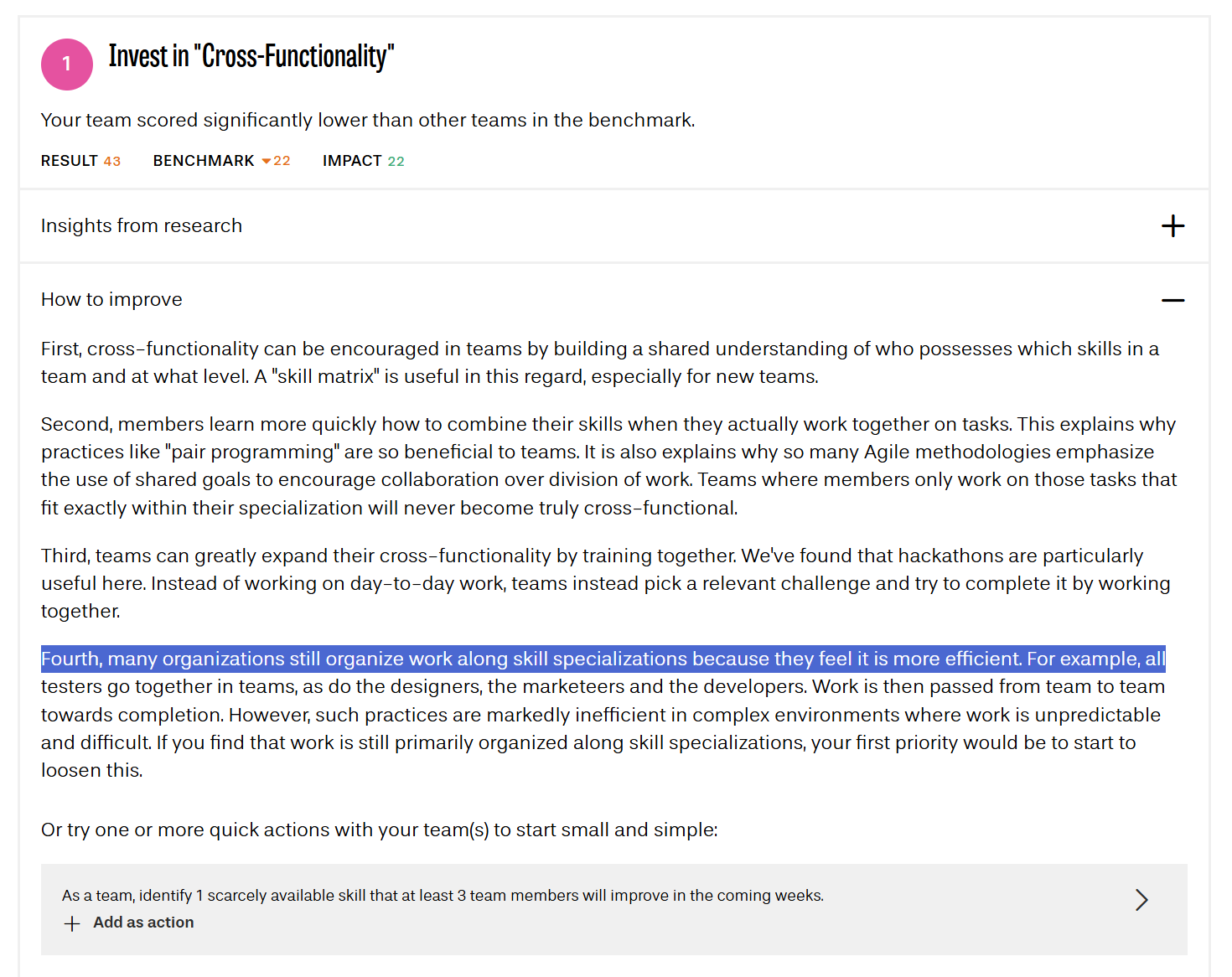
The "Teaming Success Model" is ideal for organizations that struggle to create stable teams. But even for stable teams, we shouldn't assume that actual teamwork happens there. Use our new model in Columinity to evaluate teaming in your organization, and develop the dynamic capability to do it more dynamically.
Scan your team with the Teaming Success Model now (its free)